
President Donald Trump is embarking on his Mideast trip with a clearly defined dual mission. His immediate, short-term goal is to secure the fragile ceasefire between Israel and Hamas. His long-term, more ambitious goal is to use that stability as a foundation to expand the Abraham Accords and forge a new era of Arab-Israeli peace.
The first part of the mission requires careful, hands-on diplomacy. The truce is in its infancy, and its first major test—the release of Israeli hostages—is happening now. Trump’s presence in the region, his address to the Knesset, and the deployment of US personnel to a monitoring center are all designed to ensure this phase succeeds and the ceasefire holds.
Once the truce is solidified, the second part of the mission kicks in. The White House has explicitly stated that it sees a permanent peace in Gaza as the key to unlocking the next stage of regional normalization. The focus will shift to building on the 2020 accords that established ties between Israel, the UAE, Bahrain, and Morocco.
The primary targets for this expansion are Saudi Arabia and Indonesia. The summit in Egypt will be a crucial venue for Trump to make his case to these and other leaders, arguing that the time is right for a historic reconciliation with Israel. He will likely frame it as a strategic necessity for countering Iran and a pathway to regional prosperity.
This dual mission strategy is a high-risk, high-reward approach. Success in the first part is a prerequisite for the second. Trump is betting that he can successfully navigate the immediate crisis in Gaza and then skillfully pivot that success into a lasting, transformative legacy for the entire Middle East.
Trump’s Dual Mission: Secure the Truce, Expand the Accords
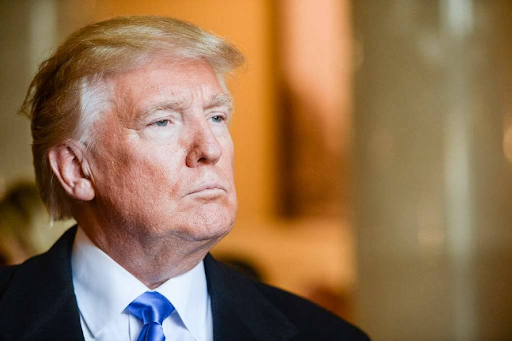
Picture Credit: www.picryl.com
69