
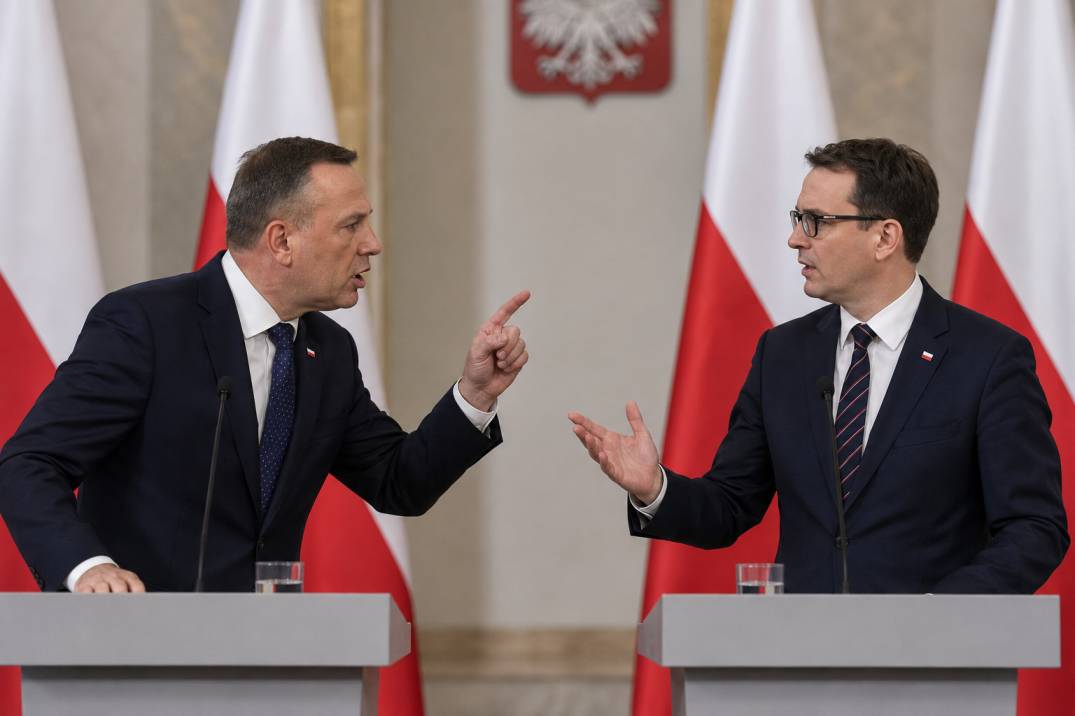
A diplomatic controversy has unfolded in Poland following comments by Chargé d’Affaires Piotr Łukasiewicz during a ceremony marking the Volhynia Massacre in Ukraine. Łukasiewicz’s acknowledgment of both the Polish victims of Ukrainian violence and the Ukrainian victims of actions by the Polish state has sparked a wave of criticism from the public and political figures alike.
Amidst the backlash, Foreign Minister Radosław Sikorski has stood in defense of Łukasiewicz, reaffirming the diplomat’s stance. Similarly, Deputy Minister Andrzej Szeptycki expressed his support for Łukasiewicz while simultaneously condemning President Karol Nawrocki for his remarks concerning historical relations with national minorities in the Second Polish Republic.
Szeptycki’s argument centered on the assertion that historical policies toward minorities should not be perceived as “normal.” He referenced events such as the Pacification of Eastern Galicia and the discrimination faced by minority communities as examples. However, his remarks were met with criticism from opposition lawmakers who accused him of minimizing the historical violence perpetrated against Poles.
This debate has underscored persistent tensions in Poland regarding the interpretation of historical events, particularly the legacy of the Volhynia Massacre and the broader Polish-Ukrainian relations. The discourse continues to reveal the deep-seated divisions and differing perspectives on how these historical incidents should be understood and remembered.