
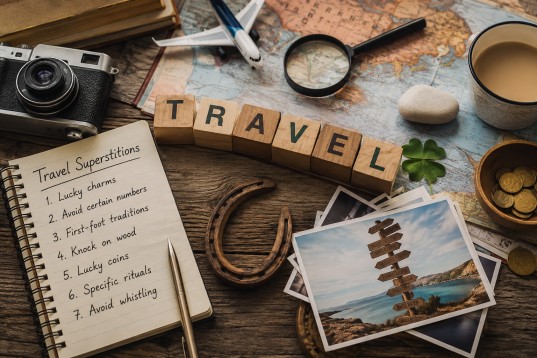
Across various cultures, travel traditions and superstitions have been cherished and passed down through generations, with the belief that certain rituals can ensure good luck and safeguard journeys. Although these practices are deeply rooted in folklore, they remain prevalent among travelers worldwide as they embark on their adventures.
One such tradition involves carrying a clove of garlic, particularly in Balkan cultures, where it is thought to ward off bad luck and negative energy. Travelers often tuck a clove into their luggage before departing, hoping it will lead to a smooth and trouble-free trip. Similarly, air travelers frequently touch the outside of an airplane before boarding, a gesture that symbolizes trust and gratitude, while also serving as a comfort to those with flight anxiety.
Another widespread belief is the custom of stepping onto a plane with the right foot first. This practice, observed in multiple cultures, is seen as a sign of good fortune, with travelers hoping to set a positive tone for their entire journey. In parts of Eastern Europe and the Middle East, family members may pour or sprinkle water behind a departing traveler, believing the flowing water signifies a safe and successful trip.
Superstitions around numbers also play a significant role in travel customs. The number 13 is often avoided in Western countries, while the number 4 is considered unlucky in parts of East Asia due to its association with death. In Italy, the number 17 carries similar superstitions. Consequently, some hotels, buildings, and airlines omit these numbers from room or seat numbering. In several Slavic countries, it’s a tradition for travelers to sit on their packed luggage for a minute before leaving, providing a moment to relax and mentally prepare for the journey.
Additionally, many cultures believe that sweeping the floor immediately after someone departs could bring bad luck or interfere with their safe return. Families often wait until the traveler has reached their destination before cleaning. While these customs are based more on tradition than scientific evidence, they remain an intriguing part of global travel culture. Whether viewed as symbols of good luck or comforting rituals, they reflect the universal human desire for reassurance at the start of a journey.