
A significant policy wedge was driven between the United States and the United Kingdom this week, as President Donald Trump and Prime Minister Keir Starmer publicly clashed over the issue of Palestinian statehood. Speaking in London, Trump made no secret of his “disagreement” with the UK’s plan to unilaterally recognize Palestine, exposing a major fault line in the transatlantic alliance’s approach to the Middle East.
At the heart of the dispute is a long-standing U.S. policy, which President Trump forcefully reaffirmed. This policy dictates that the recognition of a Palestinian state is an end-point, a result to be achieved only after a successful, bilaterally negotiated peace treaty with Israel. This viewpoint was powerfully demonstrated by the recent U.S. veto at the UN, where it opposed a resolution calling for a two-state solution that was supported by the overwhelming majority of member states.
Prime Minister Starmer, in a delicate diplomatic dance, defended his government’s contrasting approach. He presented the UK’s plan not as a defiance of the peace process, but as an attempt to revive it. He argued that granting recognition would act as a “necessary catalyst,” creating new energy and a more level playing field for the long-stalled negotiations between Israelis and Palestinians.
The two positions represent fundamentally different diplomatic philosophies. The American model is one of conditionality, where statehood is held out as the ultimate reward for compromise and agreement. The emerging British model is one of empowerment, where recognition is used as a tool to create momentum and foster the conditions for a successful negotiation. This is not just a minor disagreement; it is a clash of core strategies.
The timing of this public dispute, during a formal state visit, has amplified its significance. While Prime Minister Starmer has temporarily paused the recognition to preserve amity, the incident serves as a clear declaration of intent. The UK is signaling its readiness to diverge from American foreign policy leadership on one of the world’s most sensitive and enduring conflicts.
Palestine Policy Drives Wedge Between US and UK
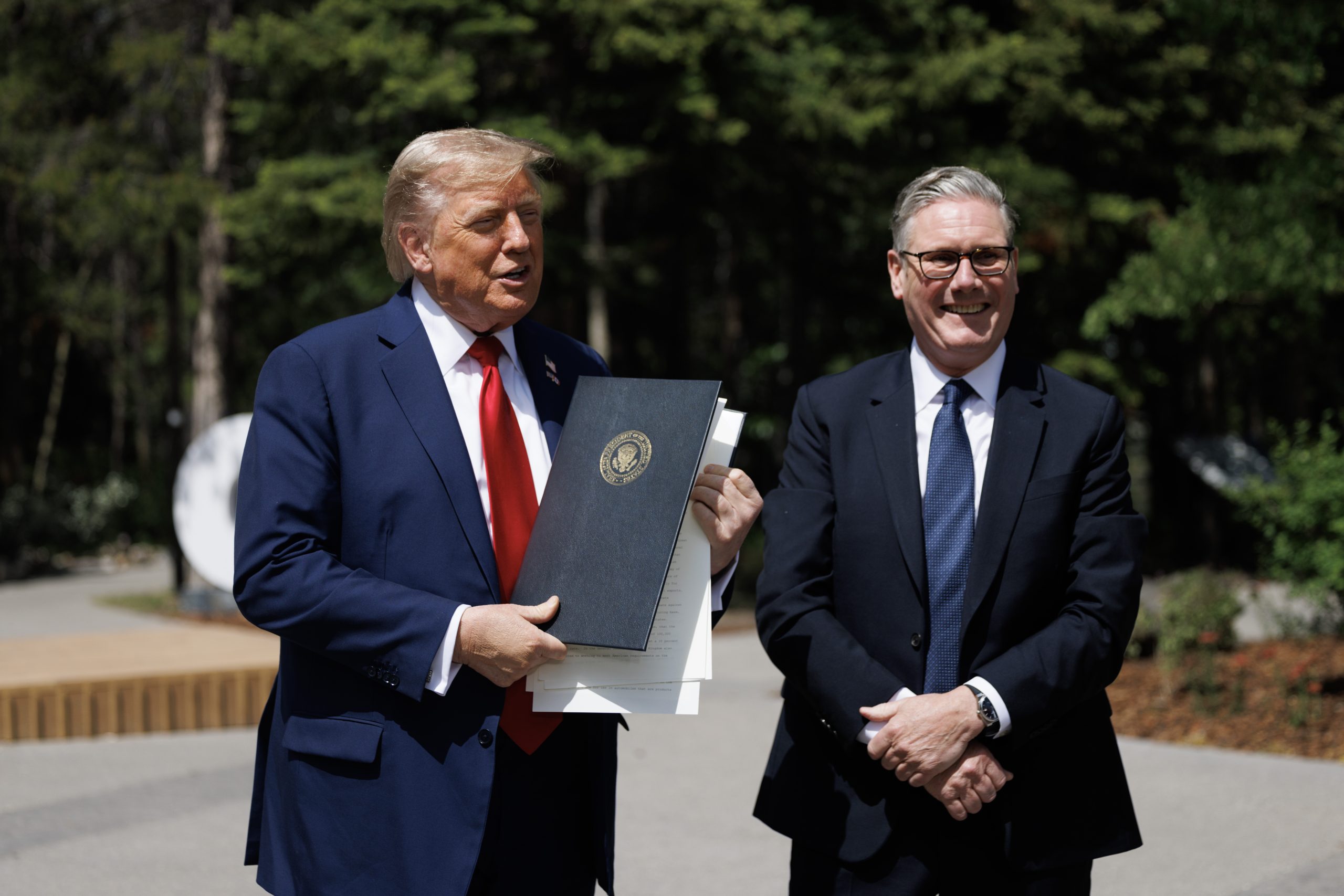
Photo by Number 10, via wikimedia commons
63