
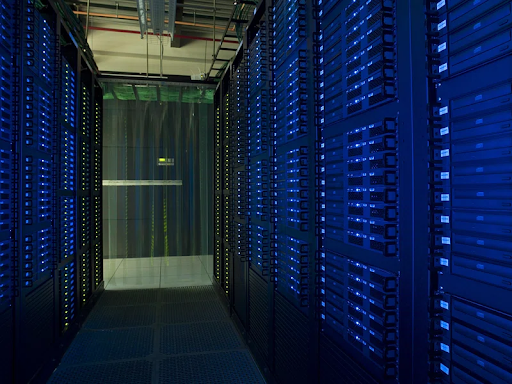
As the artificial intelligence boom fuels a $3 trillion spending spree on power-hungry datacenters, concerns about their environmental impact are skyrocketing. Google is proposing a radical solution: move the datacenters into space to leverage constant solar power and save terrestrial resources.
This “moonshot” research, named Project Suncatcher, aims to create compact constellations of satellites equipped with AI processors. These orbital facilities would be powered by solar panels that are up to eight times more productive than those on Earth, offering a near-unlimited source of clean energy once in orbit.
The primary environmental selling point is the reduction of strain on Earth’s resources. Terrestrial datacenters are notorious for consuming vast amounts of land and water for cooling. By relocating this infrastructure to space, Google aims to minimize this impact, offering a potentially more sustainable path for scaling AI.
This vision is shared by others in the industry. Elon Musk and the startup Starcloud are also pursuing space-based datacenters, with Starcloud’s co-founder noting that space offers “unlimited, low-cost renewable energy.” He claims this approach could result in a 10-fold carbon dioxide saving over the system’s life compared to powering it on Earth.
The picture isn’t entirely green, however. Each rocket launch required to build these constellations emits hundreds of tonnes of CO2. Furthermore, astronomers have long raised objections, fearing that skies crowded with satellites will become “like bugs on a windshield,” obscuring their view of the universe. Google’s first prototype launch is planned for 2027.
Space-Based Datacenters: Google’s Answer to AI’s Growing Environmental Footprint?
Picture Credit: www.rawpixel.com
59
previous post