
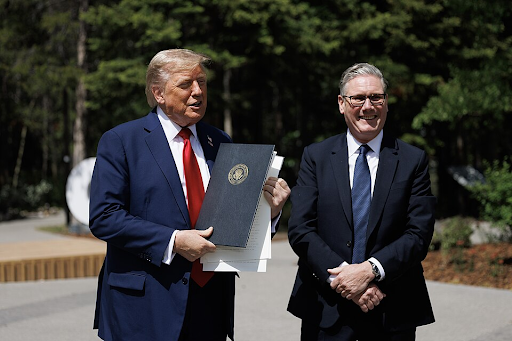
Britain’s government scrambled to respond to an unprecedented diplomatic crisis as Keir Starmer directly challenged Donald Trump’s plan to impose tariffs on European allies over the Greenland situation. The Prime Minister engaged in urgent consultations with European counterparts to coordinate opposition to what many view as an alarming development in Western alliance relations.
Trump’s threat to sanction eight European nations, including Britain, stems from their military deployment to Greenland amid American pressure on Denmark regarding the territory. Starmer’s Sunday diplomatic marathon included calls with the Danish Prime Minister, European Commission President, and NATO Secretary General, reflecting the gravity with which European capitals view the situation.
The British Prime Minister’s message remained consistent throughout his consultations: northern security cooperation serves all NATO members’ interests in protecting Euro-Atlantic stability. His assertion that targeting allies with tariffs for pursuing collective security represents wrong policy puts him on a collision course with the unpredictable American president.
A statement from the eight affected nations described Trump’s approach as undermining the transatlantic relationship and risking dangerous deterioration in Western cooperation. Under the proposed timeline, tariffs would begin at 10% on February 1st, escalating to 25% by June 1st unless an agreement on Greenland’s future emerges.
Starmer plans to use a Monday press conference to articulate Britain’s disappointment with the tariff threat while stopping short of announcing retaliatory economic measures. Government officials believe the Prime Minister’s unexpectedly cordial relationship with Trump, which has previously helped Britain avoid some US tariffs, might provide an avenue for resolving the crisis through negotiation.
Emergency Talks as Starmer Opposes Trump’s NATO Ally Tariff Strategy
Picture Credit: www.commons.wikimedia.org
37