
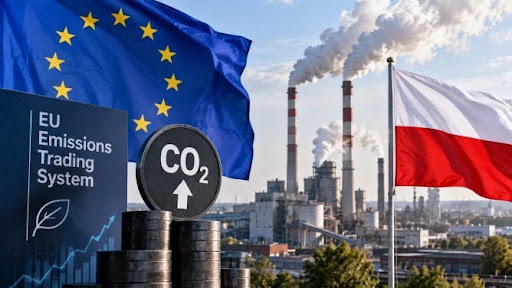
Polish businesses are feeling the strain as costs related to the European Union’s Emissions Trading System (ETS) rise, sparking concerns over the country’s industrial competitiveness. Energy sector representatives note that ETS costs can contribute to up to 50% of the electricity prices for some industrial consumers in Poland, a stark contrast to the EU average of about 11%.
Facing a challenging energy transition, Polish officials emphasize the difficulty of moving away from one of Europe’s largest coal-dependent power systems. They are advocating for changes to reduce ETS cost impacts while maintaining progress in emission reductions. Despite these challenges, Poland is making significant strides in expanding its renewable energy capabilities, with renewable sources accounting for 41.6% of its electricity mix in July. This follows a milestone where renewable energy production exceeded that of coal-fired generation for the first time.
Additionally, Poland is working to reduce its reliance on Russian gas, diversifying its supply through liquefied natural gas (LNG) imports and the Baltic Pipe. This diversification is part of a broader strategy to enhance energy security and support the country’s ongoing energy transition efforts.
Polish authorities are clear in their intent not to slow down the energy transition process. They seek greater flexibility and adequate time to safeguard industrial competitiveness and economic stability. The call for continued investment in new power-generation capacities, electricity grids, and storage solutions underlines their commitment to this transition, ensuring system flexibility and sustainability.