
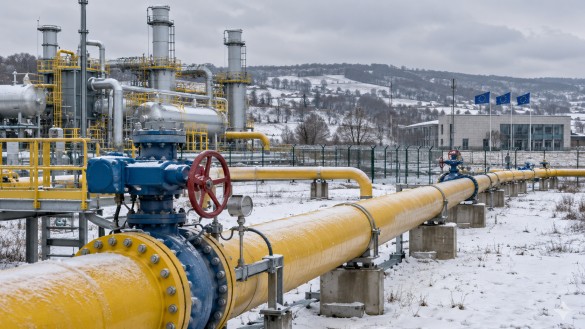
The European Union has expressed strong opposition to a proposal backed by the United States to resume Russian natural gas imports through Ukraine. This stance reinforces the EU’s commitment to eliminating its reliance on Russian fossil fuels by 2027, amid ongoing tensions related to the conflict in Ukraine.
The proposed plan, reportedly advocated by US representatives Steve Witkoff and Jared Kushner, involves restoring Russian gas transit through Ukraine with an intermediary to manage the transactions. The arrangement could provide Ukraine with transit revenue while allowing Russia to resume gas exports to European markets. Despite these potential benefits, EU officials have rejected the plan, citing the continued Russian military aggression toward Ukraine as a major deterrent to any renewed energy cooperation.
One aspect of the proposal includes placing Russian gas revenues into an escrow account in a third country to prevent funds from directly supporting Moscow’s military efforts. However, no agreement has been finalized, and the proposal faces significant legal challenges under the EU’s policy to phase out Russian gas. The EU aims to terminate long-term Russian liquefied natural gas contracts by January 2027 and ban long-term pipeline gas supplies by September 2027, with limited exceptions.
Ukraine ceased Russian gas transit through its territory on January 1, 2025, after its existing transit agreement expired. Kyiv chose not to renew the deal, emphasizing concerns over Russian energy exports financing Moscow during the war. Dutch Prime Minister Rob Jetten has also opposed the idea of resuming Russian gas purchases, advocating for increased sanctions and sustained economic pressure on Russia.
In parallel, discussions between Washington and Moscow have touched on broader energy cooperation, including the potential return of American oil companies to Russia and the reopening of certain export routes. Nonetheless, these proposals encounter political, regulatory, and infrastructure challenges, particularly within the European context.
The EU’s firm stance underscores the divergence between Washington’s reported attempts to explore economic arrangements with Moscow and Europe’s strategy to reduce Russian energy dependence while maintaining pressure due to the ongoing conflict in Ukraine.