
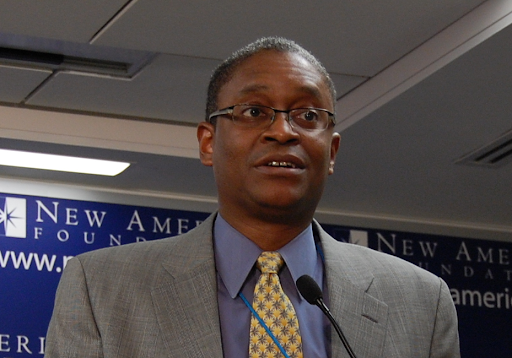
The Federal Reserve’s powerful policy-setting committee is facing another leadership hole after Raphael W. Bostic, the president of the Atlanta Fed, announced his intention to retire in February. This move adds to the recent turnover at the central bank and creates a new vacancy that will need to be filled on the Federal Open Market Committee (FOMC).
Bostic’s departure follows the August resignation of Adriana Kugler from the Fed’s board of governors. That vacancy was quickly filled on an interim basis by Stephen Miran, a top adviser to President Trump. This recent history has heightened awareness of any change within the Fed’s leadership structure, especially amid the administration’s ongoing criticism of the bank’s policies.
The FOMC, which has 12 members at any given time, is the critical body that determines interest rates for the US economy. Its membership includes the seven board governors based in Washington, the president of the New York Fed, and four regional Fed presidents who serve on a rotating basis. Bostic’s exit means a key voice will be missing from these deliberations until a successor is found.
Unlike the board of governors, who are appointed by the US president, regional Fed presidents are chosen through a different process. The Atlanta Fed has confirmed it will conduct a nationwide search for Bostic’s successor, a decision that will be made independent of the White House.
During his tenure, Bostic made history as the first African American and openly gay regional Fed president. He stated he was “incredibly fortunate” to have served and “proud” of the work done to create “an economy that works for everyone.” Chair Jerome Powell praised Bostic’s “steady voice” and leadership, saying he “advanced the Federal Reserve’s mission.”
Another Vacancy Hits Fed’s Policy Committee as Bostic Announces Exit
Picture Credit: www.commons.wikimedia.org
52