
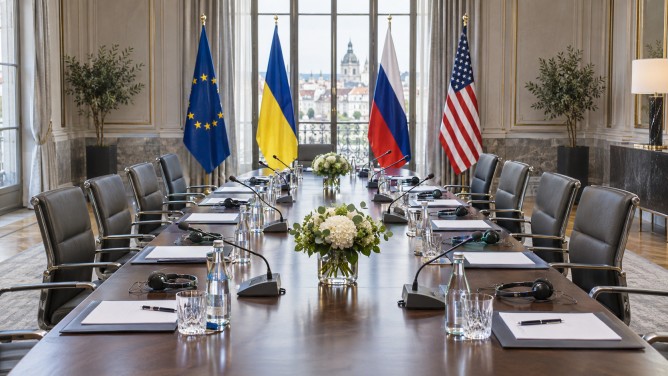
European representatives are set to participate in the next round of peace talks between Russia and Ukraine, following discussions in Moscow between U.S. envoys and Russian President Vladimir Putin. The U.S.-mediated negotiations aim to build on progress made during the November 12 meeting, which included an agreement in principle for a major prisoner-of-war exchange that could see over 1,000 Ukrainians return home.
Ukrainian President Volodymyr Zelensky has hailed the involvement of European countries as a crucial step toward reaching a comprehensive peace agreement. U.S. envoys Jared Kushner and Steve Witkoff emphasized the importance of European participation in achieving lasting resolutions.
Despite these diplomatic advances, significant disputes remain, particularly regarding territorial control and security arrangements post-conflict. President Putin has dismissed proposals for establishing demilitarized zones and remains opposed to the deployment of foreign peacekeeping forces in Ukraine, warning they might be considered military targets by Moscow.
Russia continues to assert claims over the Ukrainian regions of Donetsk, Luhansk, Kherson, and Zaporizhzhia, while President Zelensky has steadfastly refused any territorial concessions. The upcoming talks are expected to address ceasefire proposals, de-escalation measures, and long-term security guarantees for Ukraine, alongside discussions on the nation’s economic recovery and future security framework.
European leaders argue that any decisions impacting the continent’s security should involve input from European governments. However, ongoing differences between Moscow, Kyiv, and European countries pose challenges to forging a comprehensive peace settlement.