
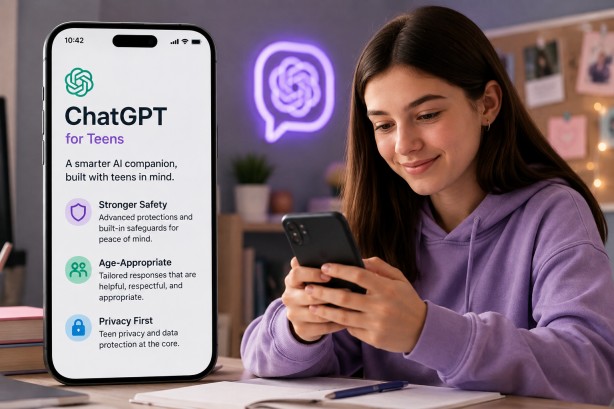
OpenAI has introduced a new version of its AI tool, ChatGPT, specifically tailored for teenagers between the ages of 13 and 17. This version aims to provide a safer online environment by implementing enhanced safety measures and age-appropriate protections. The new teen-focused ChatGPT limits discussions surrounding sensitive topics such as self-harm, suicide, and romantic conversations, catering to young users who utilize AI for academic assistance, daily inquiries, and companionship.
The revamped platform integrates features that promote healthier interactions with AI. For instance, parents can connect their accounts to set designated quiet hours during which their teens cannot access the chatbot. In certain high-risk scenarios, parents may also receive alerts to ensure their child’s safety. Additionally, OpenAI is reinforcing safeguards concerning sensitive issues like eating disorders, restricting access to potentially harmful information, and guiding users towards offline support channels if necessary.
A significant aspect of this version is its effort to prevent teenagers from forming unhealthy emotional connections with the chatbot. The AI is designed to avoid implying that it possesses personal feelings, consciousness, or emotions. This approach is intended to maintain a clear boundary between users and the technology, ensuring that teenagers use ChatGPT as a tool rather than a source of emotional attachment.
OpenAI employs age-assurance technology to estimate if a user is under 18, analyzing factors such as their interaction patterns with the service. Users identified as minors are transitioned to the teen version, which incorporates these additional protections. The educational component of ChatGPT for Teens encourages students to engage in problem-solving and understanding rather than merely providing answers or completing tasks. This initiative aims to position AI as a supplementary study aid, fostering learning rather than replacing it.