
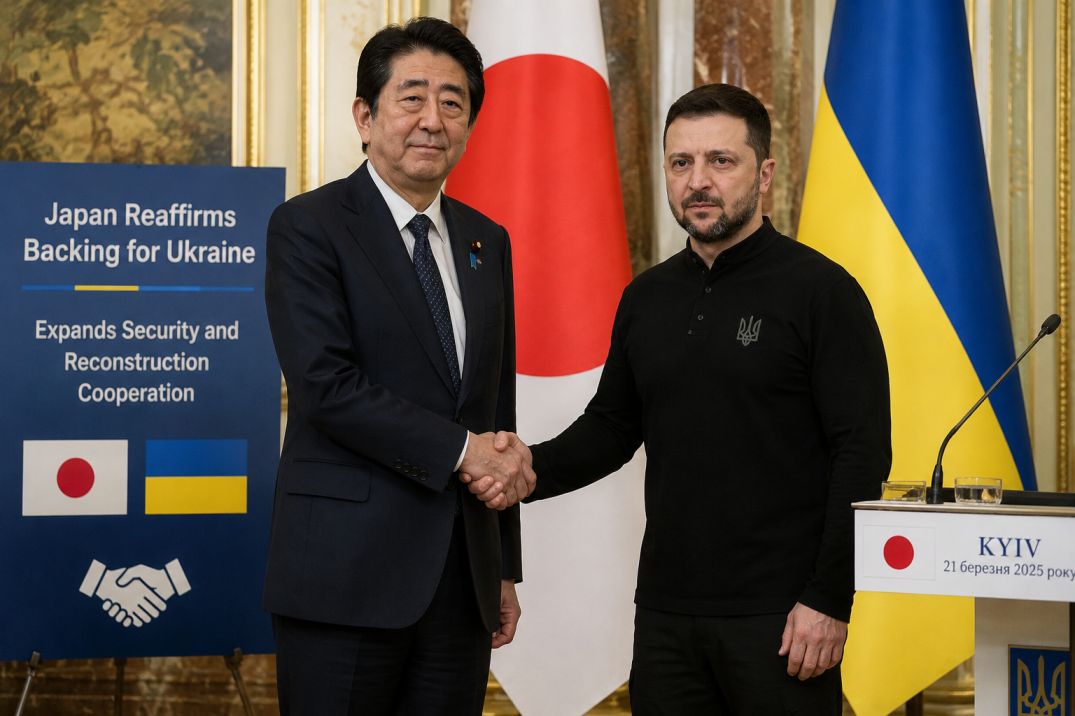
Japan and Ukraine have reinforced their dedication to deepening bilateral relations, with a strong emphasis on security cooperation and long-term support for Ukraine’s recovery efforts. This commitment was highlighted during discussions in Tokyo on July 1, where Japanese Foreign Minister Toshimitsu Motegi assured his Ukrainian counterpart, Andrii Sybiha, of Japan’s unwavering support. The talks emphasized their mutual resolve to tackle regional security challenges and enhance strategic partnerships.
Motegi affirmed Japan’s ongoing provision of political, humanitarian, and financial aid to Ukraine, alongside maintaining sanctions on Russia. He also announced Japan’s contribution to restoring the Kyiv Pechersk Lavra monastery complex, a UNESCO World Heritage Site that suffered damage from Russian military attacks. Ukrainian Foreign Minister Sybiha expressed gratitude for Japan’s steadfast partnership, confident that Japan would remain a crucial ally amid the ongoing conflict and in Ukraine’s future rebuilding efforts.
The meeting underscored the expanding security connections between Europe and the Indo-Pacific, with both nations recognizing the interconnectedness of their regional security landscapes. Sybiha highlighted the increasing military collaboration between Russia and North Korea as a shared concern, noting the importance of bolstering cooperation to address evolving geopolitical and security challenges that impact global stability.
Japan has committed approximately $20 billion in aid to Ukraine since the start of the conflict. This assistance includes generators for winter electricity restoration, equipment for humanitarian demining, and non-lethal defense supplies, such as surplus bulletproof vests. Additionally, Japan has enhanced its security contributions by allocating around 2.2 billion yen to NATO’s Prioritized Ukraine Requirements List, which aids in procuring defense equipment for Ukraine. Moreover, Japan has dispatched four Self-Defense Forces personnel to NATO’s mission in Germany to gain expertise in modern warfare techniques involving drones and advanced technologies.
Despite shifting international priorities, Japanese officials have reiterated the country’s steadfast commitment to Ukraine. Since Russia’s full-scale invasion, Japan has consistently expanded its diplomatic, humanitarian, and security engagement while aiding in future reconstruction planning. Recent high-level visits by Japanese officials to Kyiv reflect Tokyo’s ongoing intention to actively participate in Ukraine’s recovery and to promote long-term regional and global security.