
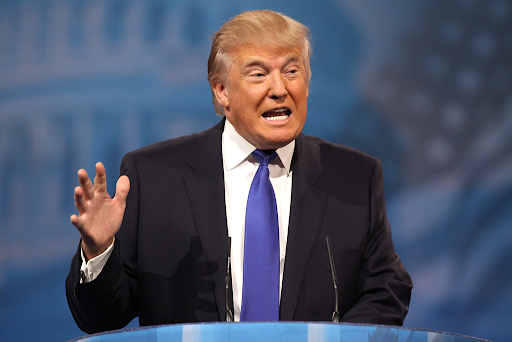
Donald Trump’s address at the prestigious World Economic Forum focused heavily on his administration’s determination to acquire Greenland, even as he attempted to reassure international audiences that military conquest isn’t on the agenda. The American president’s speech represented a high-stakes moment in escalating tensions with Denmark and broader European concerns about US intentions toward allied territories.
The president framed Greenland’s acquisition as a defensive necessity rather than aggressive expansion. According to Trump, the island’s location makes it critical for protecting American interests against Russian and Chinese influence in the Arctic. He insisted that defending Greenland requires ownership, dismissing the possibility of maintaining current arrangements or negotiating new agreements that fall short of full territorial control. “You need the ownership to defend it,” Trump declared. “You can’t defend it on a lease.”
Danish and Norwegian officials acknowledged relief at Trump’s explicit commitment to avoiding military force, with former NATO chief Jens Stoltenberg noting that many had genuinely feared armed action. However, Denmark’s foreign minister made clear that ruling out invasion doesn’t resolve the fundamental disagreement, as Greenland remains a semi-autonomous Danish territory whose people have shown no interest in American annexation. The island’s indigenous population and their wishes have been conspicuously absent from Trump’s calculations.
In what appeared to be a significant de-escalation, Trump announced postponement of tariffs against eight European countries following discussions with NATO Secretary General Mark Rutte. The president described reaching a preliminary framework covering Greenland and the Arctic region, including provisions for US missile defense infrastructure. However, the opacity surrounding these negotiations—with Rutte declining comment and no confirmation from Greenland or Denmark—raised doubts about whether any genuine agreement exists.
Trump’s broader message to Europe combined economic nationalism with criticism of allied contributions to collective defense. He suggested that while America stands ready to defend NATO members, reciprocal commitment remains questionable. The speech also included attacks on renewable energy, praise for fossil fuels, complaints about immigration, and personal insults directed at Canadian Prime Minister Mark Carney and other political figures, creating what some attendees described as an “insignificant” spectacle.
Trump’s Davos Speech: Greenland Demands Dominate as Tariff Threat Postponed
Picture Credit: www.flickr.com
56