
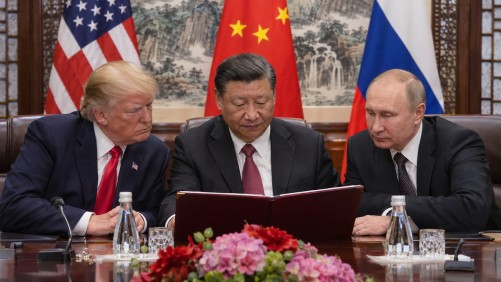
China, Russia, and the United States have come together in a historic trilateral summit in Shenzhen, China, culminating in a joint peace declaration. Despite the significance of this diplomatic engagement, the statement notably omitted any direct reference to the active conflicts in Ukraine and Iran, even though Russia and the U.S. are key players in these situations.
The declaration, signed by Chinese President Xi Jinping, Russian President Vladimir Putin, and U.S. President Donald Trump, emphasized several international priorities. It underscored the necessity for United Nations reform, the importance of nuclear security, energy supply stability, and the safeguarding of diplomatic immunity. The leaders collectively affirmed that a nuclear war cannot be won and must never be fought, with Xi advocating for the gradual elimination of nuclear weapons to ensure a world free from nuclear threats. However, the agreement stopped short of establishing a specific framework for nuclear disarmament.
In addition to nuclear issues, the leaders voiced their support for strategic stability and enhanced international security, calling for reforms within the United Nations to better address global challenges. The declaration also included criticism of the International Criminal Court and similar entities, cautioning against the misuse of jurisdiction by such institutions.
The summit also addressed global energy concerns, with the leaders committing to boost the production and supply of refined petroleum products to benefit countries worldwide. This energy agreement arrives amid ongoing international sanctions and geopolitical tensions affecting the global oil markets.
Separate bilateral talks between Xi and Trump focused on U.S.-China relations, trade cooperation, and the management of artificial intelligence. Xi emphasized the generally stable and positive relations between the two nations, while cautioning against actions that might heighten tensions over Taiwan. Both presidents stressed the importance of managing AI-related security risks and ensuring that the technology remains under human control.
Putin described the trilateral discussions as constructive and dismissed suggestions that the summit was primarily symbolic. However, analysts have expressed skepticism about whether the meeting will lead to tangible diplomatic progress, particularly in terms of nuclear arms control and resolving ongoing international conflicts.
The summit showcased China’s growing diplomatic influence and its ability to convene major global powers. Yet, the lack of concrete commitments regarding Ukraine and Iran leaves open questions about the declaration’s potential to effect meaningful progress towards international peace.